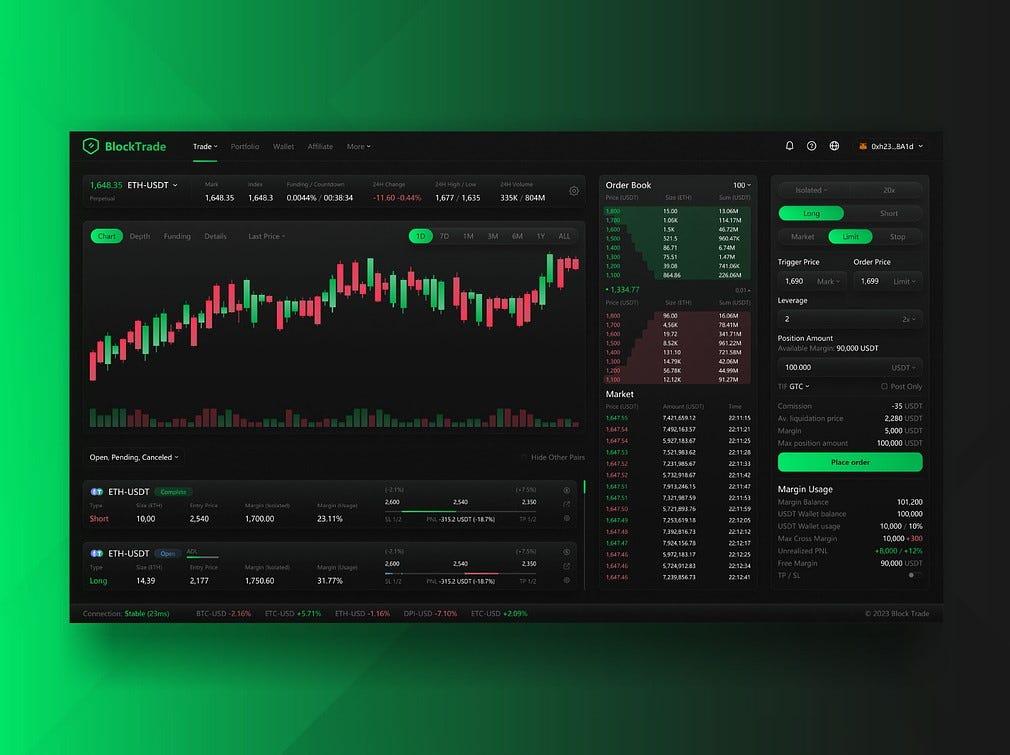
Understanding Cryptocurrency Market Data APIs
The cryptocurrency market has rapidly evolved, fundamentally transforming how we perceive money, investments, and transactions. At the core of this revolution lies the use of APIs (Application Programming Interfaces), which facilitate real-time data exchange across networks. This interaction is particularly vital for developers, trading platforms, and research institutions who require access to immediate and accurate market data. The 虚拟货币行情API is a pivotal tool in this landscape, offering insights that empower traders and analysts alike.
What is a Virtual Currency Market Data API?
A Virtual Currency Market Data API serves as a bridge between users and the cryptocurrency markets. It allows developers to programmatically access and integrate real-time cryptocurrency data, including various metrics such as price, market capitalization, trading volume, and historical data points. These APIs aggregate data from multiple exchanges and platforms, providing a breadth of information that would be labor-intensive to gather manually. Key components often accessed through these APIs include transaction histories, order book data, and price changes over time, which are essential for informed decision-making.
How APIs Streamline Crypto Trading Operations
APIs significantly streamline the operations of trading platforms by automating data collection and analysis. Traders can utilize API endpoints to execute trades, retrieve live pricing information, and receive alerts about market fluctuations without needing to manually monitor multiple sources. This granularity enables users to optimize their trading strategies, automating their workflows and building responsive applications that react to market conditions in real-time.
Key Features of Leading Crypto Market Data APIs
- Real-Time Data Access: Crucial for traders, real-time data allows for immediate responses to market changes.
- Comprehensive Market Coverage: Leading APIs cover thousands of cryptocurrencies across multiple exchanges, ensuring users have access to diverse data points.
- Historical Data Availability: APIs can provide historical data analysis, which is important for assessments of long-term trends and strategies.
- Various Data Formats: Support for multiple data formats (JSON, XML) allows for easy integration with various programming languages.
- Low-Latency Data Streaming: WebSocket connections deliver faster data streams, which are essential for high-frequency trading.
Real-Time Data and Its Importance for Traders
Real-time data is the backbone of effective cryptocurrency trading. It supports quick decision-making and enhances the precision of market analyses. For traders, having instant access to accurate pricing information and market movements can be the difference between significant profits and considerable losses.
The Role of Real-Time Data in Decision Making
In the fast-paced world of cryptocurrency trading, real-time data facilitates immediate responses to market trends. By using APIs, traders can analyze price shifts, volume changes, and order book adjustments quickly, allowing them to act on insight rather than lagging reactions. The ability to react swiftly can provide a competitive edge in volatile markets.
Analyzing Market Trends Using API Data
APIs enable traders to aggregate various data points to identify patterns and trends. For example, traders may assess historical price movements against current prices to determine potential support and resistance levels. Using sophisticated technical analysis tools provided through APIs, users can apply indicators like moving averages, Relative Strength Index (RSI), and bollinger bands, enhancing their analytical capabilities.
Benefits of Low-Latency Data Access for Trading
Low-latency data access is particularly vital in cryptocurrency trading, where seconds can mean substantial financial implications. The rapid delivery of information allows traders to execute orders at optimum prices before significant market movements occur. High-frequency trading, reliant on low-latency connections, exemplifies strategies that depend on precise timing and speed.
Implementation of Security Measures in API Usage
While APIs provide immense advantages, the security of these interfaces is paramount. The vulnerability of financial data makes it imperative for developers and traders alike to implement robust security measures to safeguard assets and information.
Best Practices for API Key Management
API keys serve as the primary authentication method for accessing market data. Best practices include generating unique keys for different applications, regularly rotating keys, and utilizing environment variables for storage instead of hardcoding them into applications. These steps minimize the risk of exposure and unauthorized access.
Securing Your Applications: Tips and Techniques
Beyond key management, securing applications through encryption protocols (like HTTPS), implementing firewall protections, and conducting regular vulnerability assessments are essential activities that help fortify systems against potential attacks. Additionally, utilizing multi-factor authentication (MFA) can add layers of protection to APIs.
Common API Vulnerabilities and How to Avoid Them
- Phishing Attacks: Educate your team on recognizing phishing attempts to secure sensitive data.
- Data Exposure: Avoid revealing unnecessary information through API responses that could assist attackers.
- Denial-of-Service (DoS) Attacks: Implement rate limiting and monitoring to detect and mitigate potential DoS attacks.
- Injection Attacks: Validate and sanitize user input to defend against SQL injection and other common web vulnerabilities.
Advanced Trading Strategies Using API Data
Using APIs for advanced trading strategies can propel an investor ahead of the curve. By integrating data access into algorithmic trading strategies, traders can tap into the full potential of automated systems.
Integrating Technical Analysis with Market Data APIs
Market data APIs allow traders to conduct technical analysis by fetching real-time and historical data that feed indicators. By employing algorithms that react to conditions defined by technical analysis (e.g., crossover strategies), traders can automate their trading processes and increase their efficiency in responding to market fluctuations.
Utilizing Historical Data for Predictive Trading
Historical data is invaluable in predictive trading. APIs can provide extensive datasets that allow traders to identify trends and recurring patterns. By applying machine learning techniques to historical data retrieved from APIs, predictive models can be developed that forecast future price movements with varying degrees of accuracy.
Automating Trades with API-Driven Bots
Automation has become a crucial element in trading strategy. By leveraging APIs, developers can create trading bots capable of executing trades based on preset conditions. This approach not only enhances trading precision but also alleviates the emotional strain often associated with trading, allowing for data-driven decisions.
Future Trends in Cryptocurrency Data Services
The landscape of cryptocurrency data services evolves rapidly, shaped by technological advancements and market demands. Understanding these trends can help traders and developers plan accordingly.
Emerging Technologies in Cryptocurrency and Blockchain
As blockchain technology matures, innovations such as layer-2 solutions and cross-chain compatibility are on the horizon. These advancements not only enhance transaction speeds and scalability but also open new frontiers for applications and services within the crypto ecosystem.
The Impact of Regulatory Changes on API Services in 2026
2026 is poised to be a pivotal year in regulatory frameworks surrounding cryptocurrency APIs. Regulations set forth by entities like the SEC and CFTC will influence how data is accessed and shared, requiring compliance checks that could complicate development. Businesses must stay informed to adjust their API services proactively.
What the Future Holds for API Integrations in DeFi
The integration of APIs within Decentralized Finance (DeFi) platforms is expected to grow considerably. As new DeFi products emerge, APIs will play a vital role in acquiring liquidity, enabling cross-platform functionalities, and facilitating user-friendly interactions with complex protocols.
What are the Risks of Using APIs for Crypto Trading?
Risks associated with using APIs in cryptocurrency trading include exposure to vulnerabilities from external integrations and data mishandling. Moreover, the reliability of third-party API services can vary, necessitating due diligence when selecting partners.
How to Minimize Mistakes When Accessing Crypto Data?
In order to minimize mistakes, it's paramount to rigorously test API integrations, monitor data accuracy frequently, and maintain compatibility with protocols to avoid disruptions. Ensuring proper error handling can also safeguard applications when faced with unexpected issues.
Strategies for Staying Updated in the Crypto API Space?
Staying updated with industry best practices, participating in relevant forums, and monitoring updates from API providers will help developers remain on the cutting edge of technology and compliance. Regularly reviewing documentation and release notes can provide insights into new features and changes to existing APIs.
Regulatory & Legal Compliance
Navigating the regulatory landscape is essential for any entity operating in the cryptocurrency space. Being informed of the current guidelines can mitigate legal risks.
2026 Regulatory Landscape
The 2026 regulatory landscape will likely be influenced by significant legislative measures such as the MiCA regulations in Europe and ongoing developments from the SEC in the United States. These frameworks aim to clarify definitions of digital assets and their classifications as securities or commodities, impacting how APIs operate.
AML/KYC Requirements for Exchanges
Anti-Money Laundering (AML) and Know Your Customer (KYC) regulations will continue to play a significant role in how exchanges develop their API offerings. Compliance requirements can affect user access to services and necessitate enhanced verification protocols.
Tax Implications and Reporting Requirements
As cryptocurrency gains mainstream acceptance, tax regulations will evolve, prompting users to understand their tax obligations fully. Proper record-keeping, aided by API access to transaction histories, can simplify tax reporting.
Common Challenges in Regulatory Compliance
- Securities vs. Utility Token Distinction: Projects must navigate the fine line between how their token functions and how it is classified.
- Cross-Border Transaction Regulations: Understanding international compliance when conducting transactions across different jurisdictional borders is crucial for users and providers.
Security Threats & Risk Management
As the technology powering cryptocurrency evolves, accompanying security threats become prevalent. Awareness of these threats allows users to implement effective mitigation strategies.
Common Security Threats
- Phishing Attacks: Users need to recognize legitimate communication from their platform and avoid clicking on suspicious links.
- Sim-Swap Attacks: Unauthorized transfers of phone numbers can grant attackers access to accounts.
- Malware and Keyloggers: Devices should be secured to prevent the installation of malicious software that can capture sensitive information.
- Fake ICOs and Rug Pulls: Users should conduct due diligence on projects before investing, as these scams continue to proliferate.
- 51% Attacks: Smaller blockchains are at risk, highlighting the importance of decentralized networks.
Provide Risk Mitigation Strategies
- Due Diligence Checklists: Create a checklist of criteria to assess the legitimacy of projects.
- Red Flag Identification: Learn to spot warning signs indicating a potentially fraudulent project.
- Community Reputation Checking: Membership in reputable communities can provide insights into project credibility.
- Contract Audit Verification: Ensure that smart contracts have undergone professional audits before investing.
- Gradual Investment Approach: Avoid significant losses by investing modest amounts initially.
- Emergency Exit Strategies: Always have a plan to withdraw investments if conditions change drastically.
Content Quality & Depth
To resonate effectively within the industry, content must balance technical expertise with accessibility. This blend promotes widespread understanding while maintaining accuracy that appeals to seasoned professionals.
Clear, organized content helps alleviate confusion regarding complex subjects such as token classifications, trading strategies, and compliance regulations. Providing well-defined sections and actionable insights allows users to implement strategies effectively and engage with the material comprehensively.
Final Thoughts
The foothold of cryptocurrency in global finance continues to strengthen, with APIs driving many innovations in trading and data provision. As we navigate the future of this dynamic landscape, prioritization of security, regulatory compliance, and the adoption of emerging technologies will be crucial for success.